

Userstory: Biomechanics and Motor Control of Human Movement at Ghent University
Structural Load & Motor Control – Research Insights from Ghent
Qualisys 3D motion capture systems, markerless motion capture, several Bertec 3D force plates, foot pressure plates, and inertial and electromyography systems spread across a total of 260 m² of lab space constitute an impressive set of equipment offering even more impressive research opportunities. Here, we’d like to briefly introduce our partner - the Department of Biomechanics and Motor Control of Human Movement at Ghent University - as well as its areas of research.
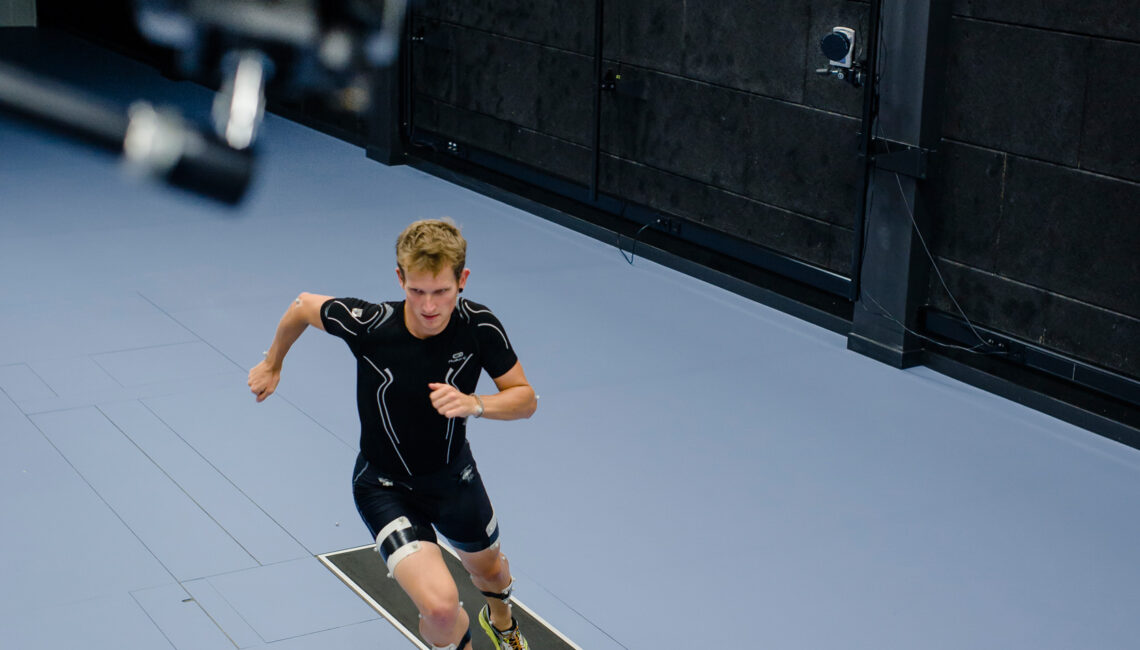
First and foremost, this is about the biomechanics of movement, such as the impact of physical stress during long-distance running, factors influencing changes in gait (e.g., the “walk-to-run” transition), and interactions between the player, the shoe, and the surface during rapid changes of direction in team sports. The central focus in these research areas: The mechanical stress on muscles and structural units.
The second, consecutive research area is the empirical determination of risk factors for exercise-induced injuries.
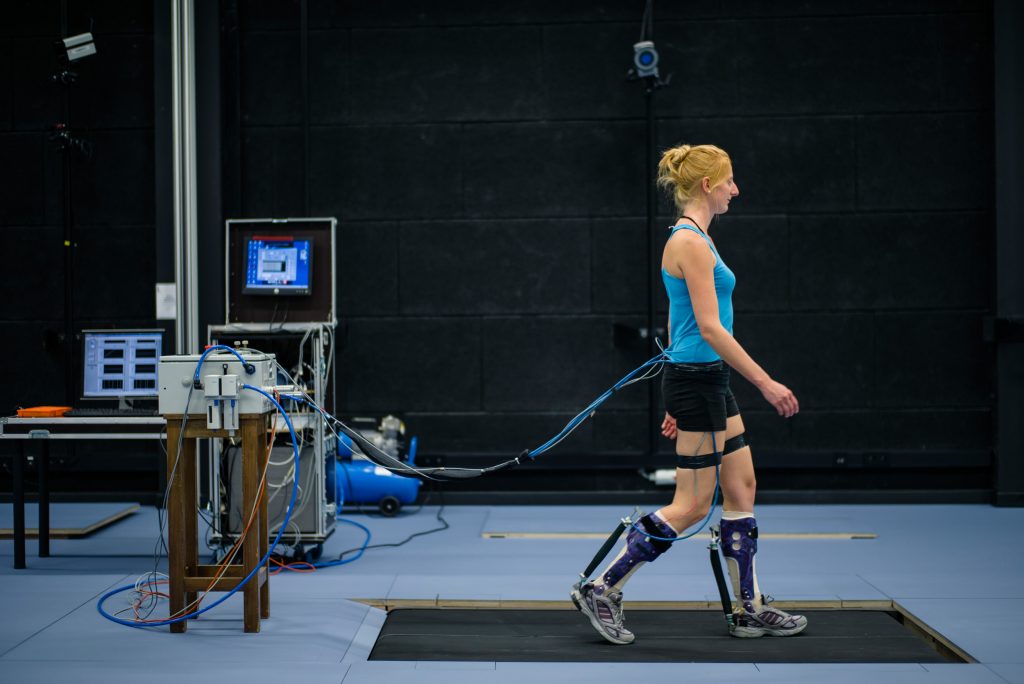
A third, complementary research area lies in the development of exoskeletons for both people with disabilities as well as healthy individuals to reduce structural stress and thereby also lower the risk of injury.
Sports medicine tests on side to determine mechanical stress, interactions with the surface, and the resulting injury risks fulfill the broad applicability of the equipment as a fourth area.
Together, these four areas of research and application enable comprehensive new insights and scientific discoveries regarding human movement and its patterns. The primary target group for this research includes in particular children with mobility impairments, those who are severely overweight as well as normally developing children and elite athletes.